


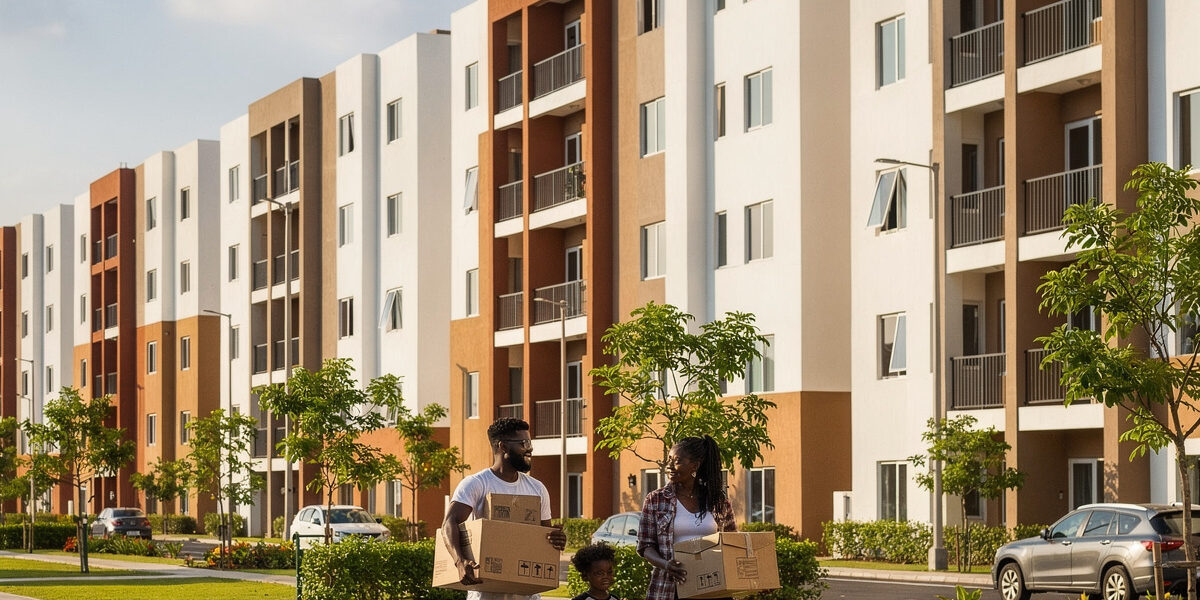
Affordable Housing in Nigeria: Addressing the Housing Deficit and Meeting the Demand
Nigeria does not have a small housing problem. It has one of the largest housing gaps in the world, and it grows a little wider every year the country builds fewer homes than it needs.
For a buyer or investor, that gap is not just a policy headline. It is the reason prices keep climbing, the reason good, titled homes get snapped up, and the reason the financing routes that finally make ownership reachable are worth understanding in detail.
This guide sets out the real scale of the shortage, why affordable housing in Nigeria has been so hard to deliver, and the schemes and reliefs now changing what is possible for ordinary buyers and the diaspora.
How Big Is Nigeria’s Housing Deficit, Really?
For years the figure quoted was 17 million homes, repeated so often that nobody checked where it came from. In 2026, the government finally measured it.
A new baseline from the National Housing Data Technical Committee puts the deficit at about 14.9 million units. As a Guardian editorial on the 14.9 million housing deficit noted, the old 17 million number had been recycled for years without a clear method behind it, and 14.9 million is now the defensible figure.
That is the conservative count. Lagos State has argued the effective shortage is far larger, warning it could approach 28 million units once millions of substandard and structurally defective homes are counted as unfit. Either way, the message is the same. Nigeria needs to build homes at a pace it has never managed, estimated at around 500,000 units a year for a decade, just to stand still.
Why the Gap Keeps Growing
The deficit widens because demand rises faster than supply, and several forces push demand up at once.
The first is urbanisation. Around 55.8% of Nigerians now live in cities, and that share is projected to reach 70% by 2050, with the urban population growing at roughly 3.4% a year. Every year, millions more people need homes in exactly the places where land is scarcest and dearest.
The second is affordability itself. Home prices in the major cities now run at roughly 8 to 12 times average annual household income, according to reporting on the housing gap. When a home costs a decade of income and mortgages are scarce, most families simply cannot buy, so demand piles up unmet.
The third is informality. With a large majority of the workforce earning in the informal economy, most households cannot show the documented, steady income that formal lenders require, which locks them out of the credit that would let them build or buy.
The Mortgage Problem at the Heart of It
If there is a single reason affordable housing in Nigeria has stayed out of reach, it is the near absence of a working mortgage market.
Nigeria’s mortgage market sits below 1% of GDP, among the lowest ratios in the world, against 60% or more in developed economies. In practice that means almost nobody buys a home with a long-term loan. They save for years, build slowly out of pocket, or do not buy at all.
The state housing fund shows the scale of the blockage. Decades after it was created, the National Housing Fund has millions of contributors but issues only a few thousand mortgages a year. A country cannot house a growing urban population when the main tool for spreading the cost of a home barely functions.
What Is Actually Being Done About It
The picture is not all bleak. Several 2025 and 2026 interventions are, for the first time in a while, attacking the problem from the financing side rather than just promising units.
The MREIF mortgage
The flagship is the MOFI Real Estate Investment Fund, a ₦1 trillion programme sponsored by the Ministry of Finance Incorporated. It offers mortgages at a fixed 9.75% a year over up to 20 years, with a minimum equity contribution of 10% and loans between ₦10 million and ₦100 million. Against commercial mortgage rates of 18% to 25%, that is transformational. By April 2026, reporting on the scheme put mortgages originated at about ₦104.59 billion across more than 1,500 beneficiaries in 24 states, and it is open to Nigerians abroad. Our guide on the MREIF mortgage for Nigerians abroad explains how to apply.
Renewed Hope Cities and Estates
On the supply side, the federal Renewed Hope programme targets 100,000 affordable homes nationwide through outright purchase, mortgage and rent-to-own. The Lagos Renewed Hope City in Ibeju-Lekki alone accounts for 2,084 units, with the Federal Mortgage Bank funding 1,500 of them, per the Federal Ministry of Housing. It is a start, even if it is modest against a 14.9 million shortfall.
Tax reliefs that cut the cost of buying
The Nigeria Tax Act 2025, in force from January 2026, removed VAT on the sale of land, completed buildings and rent, and made mortgage interest deductible for owner-occupiers. Confirmation that VAT was removed on property came from the chair of the presidential tax reform committee. Our breakdown of the taxes and fees on a property sale shows what a buyer now pays at closing.
The Cost Pressures Working Against Affordability
The reliefs are real, but they are pushing against strong headwinds, and honesty about them helps a buyer plan.
Building materials remain expensive. A 50 kilogramme bag of cement now sells for ₦12,500 to ₦15,000, nearly double the African average. Money is dear too, with the Central Bank holding its benchmark rate at 26.5% in 2026, which keeps commercial mortgages costly. Inflation, though easing to around 15.91% in mid-2026, has already locked in years of higher costs. These forces explain why new supply stays expensive even as the government tries to widen access. Our guide on how government policies affect housing prices covers the full picture.
What Affordable Housing in Nigeria Means for You Today
Step back from the national numbers, and the practical lesson for an individual buyer is clear. The tools to own now exist, and the buyers who understand them move first.
A subsidised MREIF mortgage turns a purchase that once needed full cash into one you can spread over 20 years at a single-digit rate. The 2025 tax reliefs quietly cut thousands from the true cost of buying. And in a market with a 14.9 million-unit shortage, a well-located, properly titled home is not only somewhere to live, but it is also an asset with a structural tailwind behind its value. If you are weighing whether to buy a finished home or build, our comparison of buying or building is a useful next read.
For the diaspora, the same logic is sharper. A weak naira stretches foreign income further, MREIF is open to Nigerians abroad, and the rules on who can own are straightforward for anyone Nigerian by birth, as our guide on whether a foreigner can buy property explains.
Beyond Mortgages: Rent-to-Own and Cooperatives
A mortgage is not the only route, and for many households it is not the first one. The affordable housing in Nigeria conversation increasingly includes models that do not need a large deposit or a formal payslip.
The Renewed Hope programme offers homes through rent-to-own as well as outright purchase, letting occupiers build equity as they pay to live there. Housing cooperatives, where members pool contributions to build or buy together, remain one of the most practical tools for informal-sector earners locked out of bank credit. Neither is a silver bullet, but both widen the door for people a conventional mortgage would turn away.
The Bottom Line on Affordable Housing in Nigeria
Strip away the politics and the headline numbers, and affordable housing in Nigeria comes down to two things moving in opposite directions. Demand keeps rising as cities grow, while the cost of building and borrowing stays high. The gap between them is the deficit.
What has changed is that the financing side is finally being addressed. For the first time in years, a buyer with steady income has a realistic path to a 20-year, single-digit mortgage, a tax system that no longer penalises the purchase, and a market where a titled home is a genuinely appreciating asset. The shortage is a national problem, but for the individual buyer who understands the tools, it is also the reason to act sooner rather than later.
Where a First-Time Buyer Should Start
If the national numbers feel overwhelming, narrow them down to your own next step. Affordable housing in Nigeria becomes real one decision at a time.
Start by pulling your credit report and clearing any defaults, because a clean record is what unlocks an MREIF mortgage. Work out what you can comfortably repay each month, then look only at titled homes from developers you can verify. A well-chosen first home in a market this short of supply is not just shelter; it is the foundation of everything you build financially afterwards.
How Edenbrooks Homes Fits Into the Solution
At Edenbrooks Homes, we build the kind of titled, well-located homes that the affordable-housing conversation is ultimately about: real assets that hold their value in a market crying out for quality supply. Our homes are the completed, titled, owner-occupier properties that a MREIF mortgage is designed to finance.
Our developments, including Maison D’Eko Residences III, Maison D’Eko Residences, and Wakefield Apartments, give you a home built to last in a country that cannot build them fast enough.
Contact us today to start the conversation. Our team will show you which of our homes are MREIF-eligible and walk you through the financing before you commit a naira.
Email: [email protected] | Call/WhatsApp: +2347060474224 | +2348087691124
